
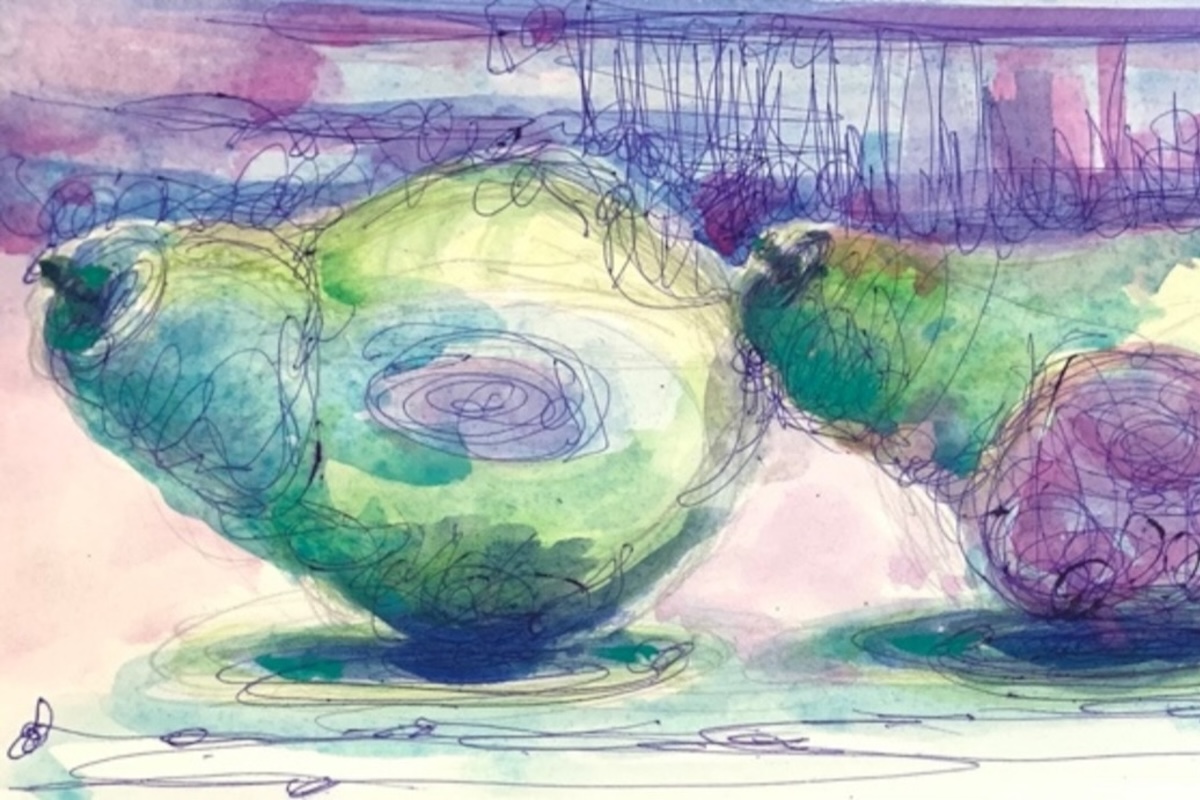
It is amazing how much influence art galleries can have on art students, particularly on setting a standard for what people can expect or hope to learn, and that includes the importance of Expressive Sketches. Expressive Sketches or the drawing process behind the final product often gets overlooked in Gallery collections and consequentially, in classrooms.
Pertaining to Gallery representation, most of what we see are finished products lacking any exposure to the many revisions and sketches that go behind the final painting or sculpture. Often galleries have plenty of drawings and paintings that connect to a specific artist or artwork but tend to select, disperse, and separate drawings from paintings to display in different locations, or not show the drawings at all. As a result, the expressive hand of the artist often gets missed completely in the display process. Art can mean anything these days, and if we aren’t seeing the Art Process in galleries or classrooms, then we can’t know or even imagine how important sketches are not just to setting a standard in art, but for the benefit of personal happiness and wellbeing overall.
For sake of definition, let’s look at what Expressive Sketches are and why we need then in our lives. Expressive Lines or Gestures, as they are called in Art School, is an art technique that has been employed by artists for centuries. In short, Expressive Lines are a series of quick sketches in which artists explore people, places or things. Multiple small sketches can take up a whole page, and the drawings themselves can be timed to as little as 2-5 minutes per sketch. Traditionally they have been limited mostly to drawing or painting the Figure but, expressive lines apply to so many different types of subject matter not just limited to the human form, and they can be learned at any age and level.
The history of Expressive Lines can be traced as far back as the Renaissance artist, for example, Leonardo da Vinci. Where Leonardo faced the pressure of living off his paintings from commission, the expressive sketch revealed his true character without the pressure of worrying about public approval. The sketchbooks meant much more than what the artist could sell. The Leonardo sketchbooks revealed everything from the anatomy of the womb with embryo, handwritten notes and lists, the study of the movement of water and light, to forecasting predictions no one could have imagined possible in Renaissance times, like a flying machine. Most important, Expressive Line is a technique one that can make a significant difference to the way we educate the public, and not just to learning Art, but to Health and Wellbeing overall.
I profess I am no doctor or researcher. As a teacher I know that expressive sketches mean much more than just a bunch of lines on a page. The critical value of expressive lines became evident to me many years ago when I volunteered my services to an adult who had lost his speech due to a stroke that left damage to the left side of the brain. I had him draw a tree outside the window, encouraging him to draw a bunch of quick lines on a page in continuous directions, not stopping, and never taking his hand off the page. He was so pleased with the freedom he derived from quick sketches, that he ended the session signing his name to his drawing and gave it to me, which is an heirloom I hold near and dear to my heart to this very day.
Unlike long drawings, quick sketches are good for you. The freedom, speed and stamina that they develop help overcome the fear and stress associated with the empty page since timed expressive sketches leave no time to worry or self-criticize. Take for example these expressive lines which seem to have no real meaning until we reveal the full drawing:
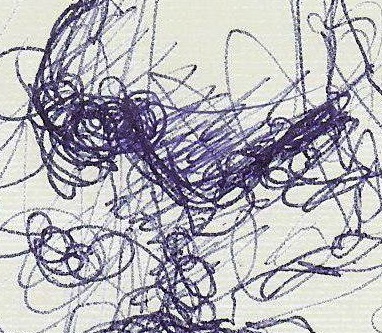
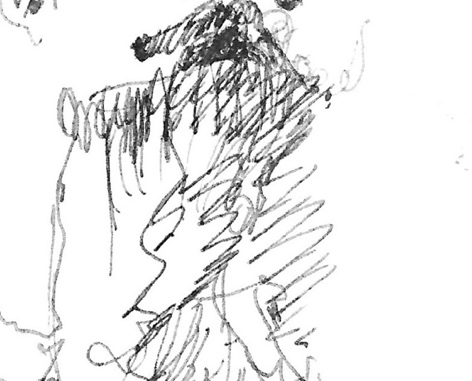
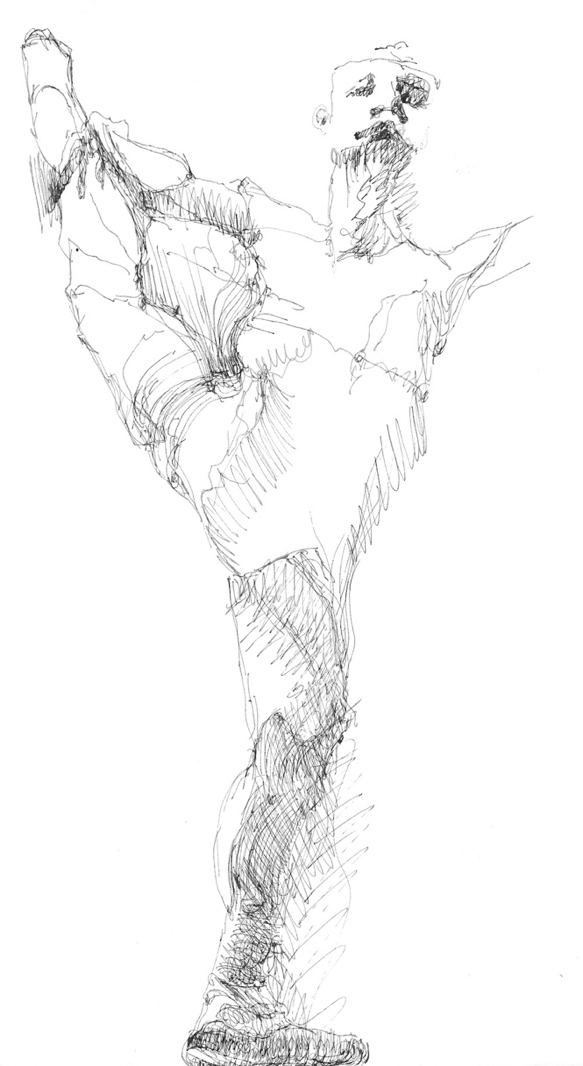
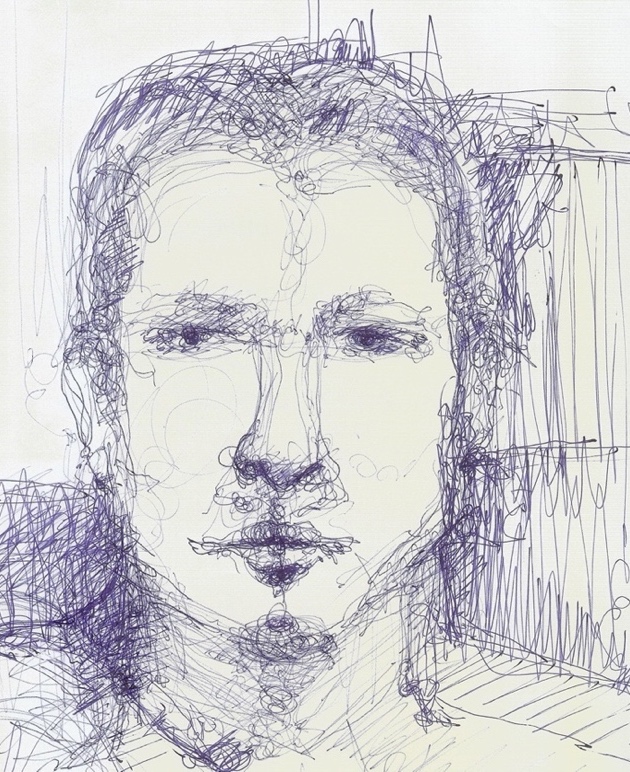
© Michelle Fish, Learn Art Toronto, 2026
We want so much for everything in our artwork to look as it is supposed to that it’s easy to forget we are transforming reality into an image of lines first. Expressive Lines may look like a bunch of scribbles up close, but they are the driving force behind life, energy, and dynamic movement in your drawings and paintings. Expressive sketches, especially the quality and expression of your line contribute to all other art skills like Shape, Composition, Perspective, Light and Dark, and Color.
Line seems to be the most important of these skills even if it just means picking up a pen and a sketchbook. Working with expressive line expedites all the other skills mentioned above while completely changing the way you transform ordinary subject matter into your artwork. Expressive Sketches break out of other conventional methods to incorporate many more options for encouraging individuality, while improving artistic potential, confidence and most important, quality of life.
Expressive sketches are not a quick fix to all of life’s problems. The technique grows on you as you do many of these exercises. There is a learning curve to the technique, and that which doesn’t always lead to final masterpieces. But, when there is a set of basic skills that gently guide you through the exercises, while cultivating a sense of social connection, healing, or even just calmness in a busy week, something magical happens inside us. Perhaps it’s not even the final artwork that matters at all, but more, discovering a type of Creative Bliss, or a reminder that something greater exists beyond the finished Drawing or Painting. Artistic expression leads to a new path forward in ourselves and our redefinition of success, and what is important in our lives.
Creative Bliss is not about perfection but far from it. Nor is it whether you pass or fail. It’s not just about art. It’s when you free yourself from all the constraints that our quick fix, fast paced culture imposes upon us, and, instead, take a fresh breath with a sketchbook and pencil in hand. Bliss is not just about arriving at the final product or destination. Bliss is the happy accidents that lead you there that count the most.
We’d love to hear from you! Please send us your suggestions for future articles. And if you’re a writer, please see our writer’s submissions page for details.