
There comes a time in many of our lives when we begin to wonder whether the things we have spent so much time pursuing are the things that truly matter.
We may have built successful careers, raised families, accumulated possessions, and achieved many of the goals we set for ourselves. And yet, somewhere along the way, a quiet question begins to emerge: Is this all there is?
It is not necessarily a question born of unhappiness. Sometimes it arises precisely when life has gone well. We have climbed the mountain, only to discover that the view from the summit is not quite what we expected.
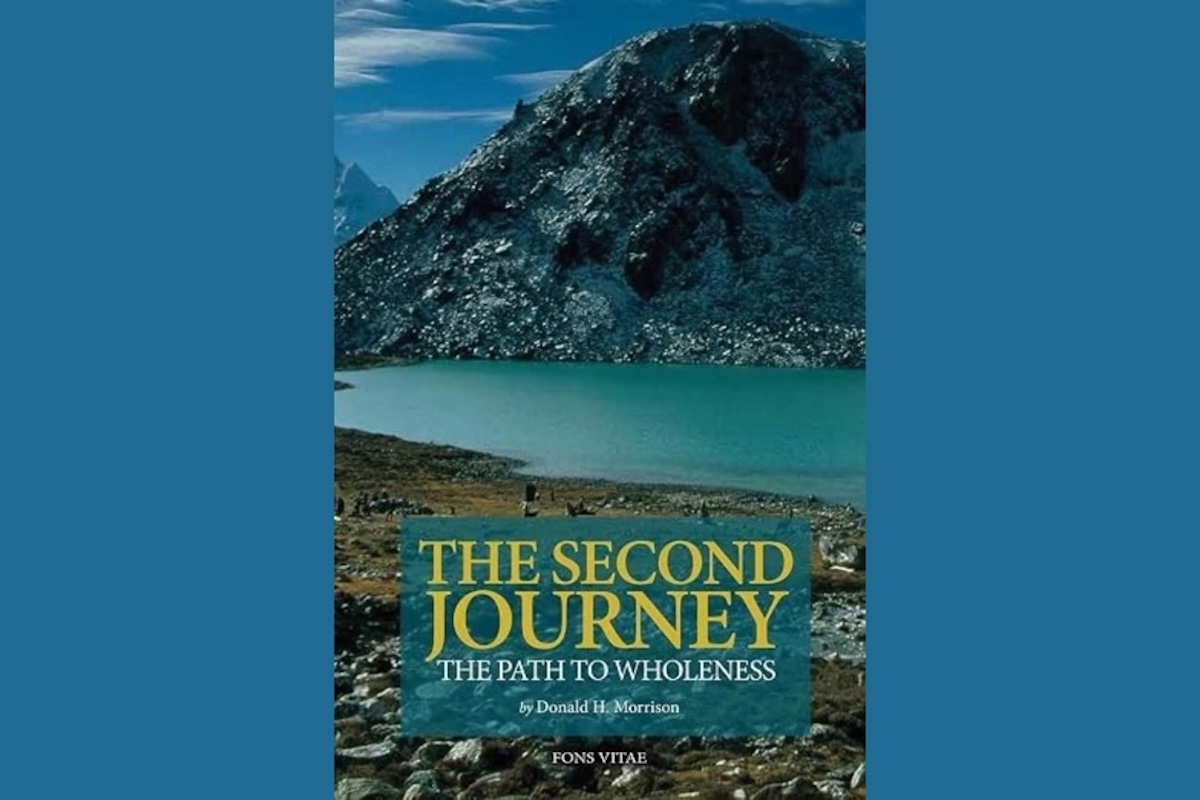
This is often the beginning of what I call The Second Journey.
The first journey: Becoming somebody
The first journey is the journey most of us begin early in life. It is about establishing ourselves in the world, developing an identity, building relationships, acquiring skills, and finding our place in society.
It is an important and necessary journey.
For much of my professional life, I was deeply engaged in this process. I spent decades in the corporate world, ultimately serving as Chief Operating Officer of BlackBerry during its extraordinary period of global growth.
It was an exciting and rewarding experience. Yet, alongside my professional life, I had been pursuing another path, one that began in my youth and gradually became increasingly important.
This was a journey of spiritual exploration, drawing upon the wisdom of Christian mystics, Buddhist teachers, contemplative traditions, and the great spiritual thinkers of both East and West.
Over time, I came to appreciate that these two journeys, while seemingly different, are intimately connected.
The first journey helps us become somebody. The second invites us to discover who we are when we no longer need to be somebody.
The second journey: Discovering our true nature
The second journey is less about acquiring and achieving and more about awakening.
It is a movement from external accomplishment toward inner transformation; from seeking approval toward authenticity; from control toward acceptance; and from self-preoccupation toward compassion and service.
It is not about abandoning our responsibilities, relationships, or ambitions. Rather, it is about changing the consciousness with which we engage them.
The Christian contemplative Thomas Merton spoke of the distinction between the false self and the true self. The false self is the identity we construct through our achievements, possessions, roles, and the approval of others.
The true self is something deeper. It is who we are beneath these layers of conditioning.
Buddhist traditions approach this question somewhat differently, inviting us to examine our attachment to a fixed and separate sense of self.
Although these traditions differ in important ways, both point toward a liberating insight: much of our suffering arises from our attachment to the person we believe we must be.
The second journey invites us to loosen that attachment.
And in doing so, we begin to discover a different kind of happiness.
Beyond happiness: The discovery of inner freedom
We often think of bliss as a feeling of happiness, excitement, or pleasure. These experiences are wonderful, but they are inevitably temporary.
The bliss associated with the second journey is something more enduring.
It is the growing capacity to live with equanimity, gratitude, compassion, and an openness to life as it unfolds.
It is the freedom that comes when we no longer require everything to go our way in order to be at peace.
This does not mean that we become indifferent to suffering or immune to disappointment. Indeed, the second journey often deepens our sensitivity to the suffering of others.
But we begin to recognize that our well-being need not depend entirely upon external circumstances.
We can experience joy without possessing everything we desire. We can find meaning in difficulty. We can love without needing to control. We can serve without requiring recognition.
This, I believe, is a much deeper understanding of bliss.
How do we begin?
One of the central messages of my book, The Second Journey, is that spiritual transformation is not simply an intellectual exercise.
Reading inspiring books, attending retreats, or listening to spiritual teachers can be valuable. But genuine transformation requires practice.
There are several disciplines that can help us begin.
Meditation and contemplative prayer teach us to quiet the constant activity of the mind and become more attentive to the present moment.
Detachment helps us recognize the ways in which our identities, expectations, and desires can imprison us.
Letting go of destructive emotions allows us to relate differently to fear, anger, resentment, and anxiety rather than being governed by them.
Cultivating virtue encourages us to embody compassion, humility, patience, generosity, and kindness in everyday life.
Devotion and surrender invite us to acknowledge that we are part of something greater than ourselves, whether understood through a religious tradition or a broader spiritual perspective.
These practices are not intended to make us perfect. They help us become more conscious, more loving, and more fully present.
And they need not require hours of daily effort. Even a modest but consistent practice can gradually transform the way we experience ourselves and the world.
The journey is not a straight line
One of the most important things I have learned is that spiritual growth is rarely linear.
We may experience moments of profound clarity, compassion, or inner peace, only to find ourselves caught up in familiar anxieties and patterns the following day.
This is not failure. It is part of the human condition.
The second journey requires patience, humility, and a willingness to begin again, sometimes many times in a single day.
In the Western/Christian tradition, we speak of grace. In other traditions, we encounter different understandings of awakening and transformation.
What they share is a recognition that our deepest growth cannot be reduced to another achievement to be added to our résumé.
We can prepare the ground, cultivate awareness, and make ourselves receptive. But transformation also requires a willingness to surrender our insistence on controlling the outcome.
Finding your bliss by living differently
Perhaps the greatest surprise of the second journey is that the happiness we seek becomes more accessible when we stop making our own happiness the centre of everything.
As our attachment to self diminishes, our capacity for love expands.
We become more available to the people around us, more attentive to the beauty of ordinary life, and more willing to contribute to something beyond our own interests.
The second journey is not an escape from the world. It is an invitation to live more fully within it.
And perhaps that is where our deepest bliss is found: not in becoming more successful, more admired, or more accomplished, but in becoming more authentically ourselves. Then the world opens to us.
The invitation is open to all of us, wherever we may find ourselves in life.
We need only be willing to begin.
We’d love to hear from you! Please send us your suggestions for future articles. And if you’re a writer, please see our writer’s submissions page for details.